
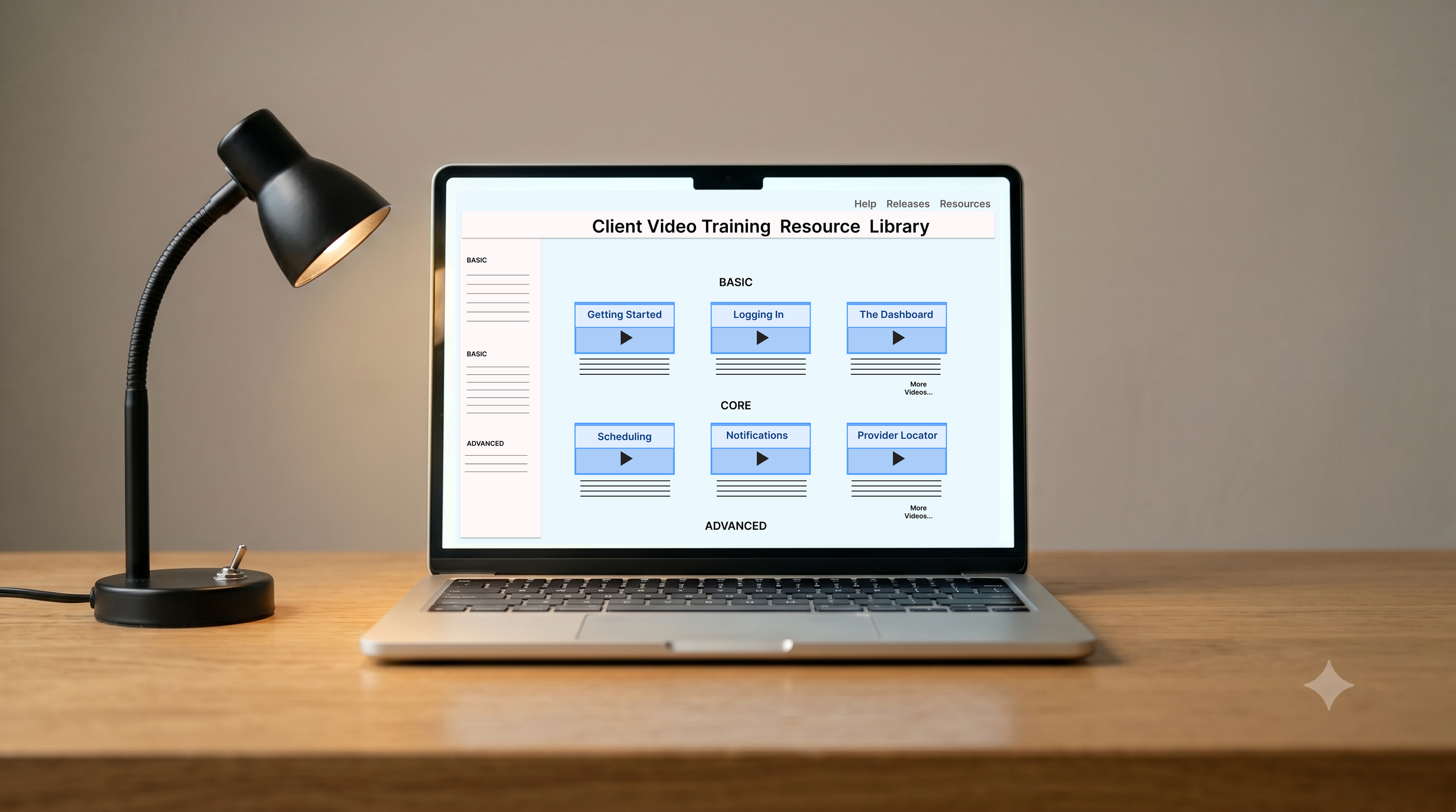
TeleVox Video Training Resource Library
Video-led support for healthcare platform adoption
Responsibilities: Instructional Design, Video Training Development, eLearning Production, SME Collaboration
Target Audience: Healthcare omnichannel platform clients
Tools Used: ChatGPT, Murf.ai, Camtasia, Vyond, Vimeo, SharePoint
Visuals are representative due to client confidentiality
Overview
Supporting healthcare clients through a major platform migration with scalable, on-demand video training.
During a large-scale platform transition, healthcare clients needed a faster way to learn new self-service workflows without relying only on live training. I created a client-facing video resource library that turned common platform tasks into short, task-based tutorials users could revisit during onboarding, daily use, and post-migration support.
The library also gave trainers and client-facing teams a reusable resource for onboarding, follow-up, and ongoing client support.
Problem
Clients were transitioning from a legacy, agent-supported platform experience into newer self-service healthcare communication tools.
Live training alone could not scale to support a large client base. Users needed clear, accessible help for common platform tasks, while internal teams needed reusable resources that could reduce repeated explanations and support a smoother migration experience.
Solution
Developed a client-facing video resource library organized around practical platform tasks and common user workflows.
The training approach focused on:
Short, task-based tutorials
Clear narration and screen guidance
Consistent visual structure across videos
Reusable resources for onboarding and ongoing support
Easy access for clients and trainers during adoption
The video library helped make the platform migration feel more manageable by giving users support they could revisit as needed.
Scalable Support for Platform Migration
Representative graphic showing how on-demand video supported platform migration and client adoption. Proprietary platform details have been removed.
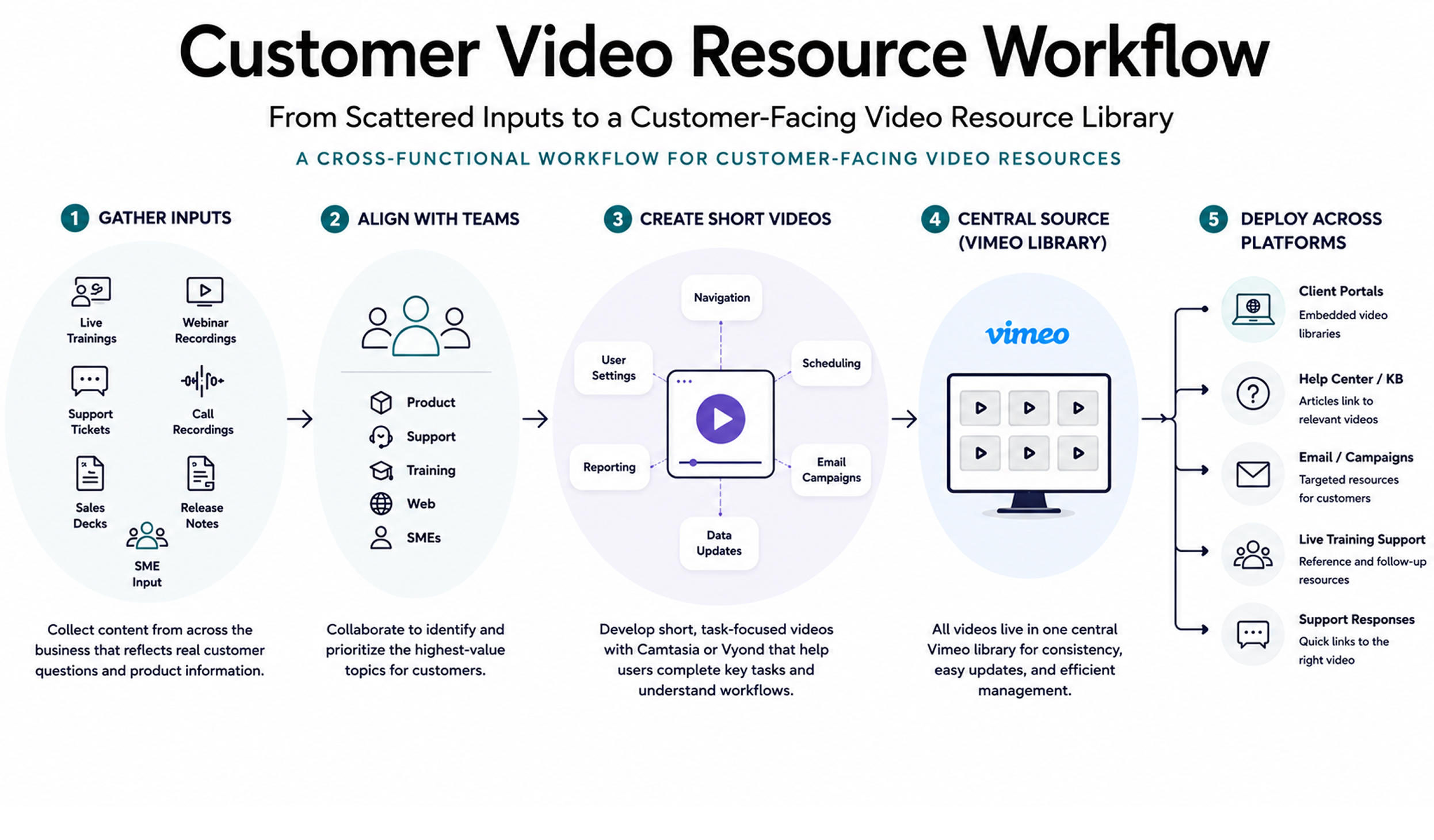
Design and Development Process
Structured product knowledge into clear, usable video training
I partnered with product managers, SMEs, and client-facing teams to identify the platform tasks clients needed most during the migration. From there, I translated product workflows into concise scripts, screen sequences, and short video tutorials that could support both onboarding and ongoing self-service use.
The development process included:
Identifying high-priority user workflows with product and training stakeholders
Translating complex platform steps into clear, task-based video scripts
Creating visual screen guidance, callouts, and narration to support learner understanding
Producing videos in Camtasia and Vyond with a consistent structure and style
Using AI-assisted scripting and narration workflows to speed production while maintaining clarity
Coordinating review cycles so videos stayed aligned with product updates and client needs
This process helped turn a large platform migration into a more manageable learning experience, giving users practical support they could access when they needed it.
Final Development
Once the core tutorial structure was established, development focused on creating a consistent and scalable video experience across the training library.
Each video was built to support a specific client task or workflow, with clear narration, focused screen guidance, and visual pacing that helped users follow the steps without feeling overwhelmed. I also worked through review and revision cycles with SMEs and product stakeholders to ensure the videos remained accurate as platform workflows evolved.
The final library gave clients an on-demand support resource they could return to during onboarding, daily use, and post-migration adoption.
Takeaways
This project showed the value of creating scalable learning resources during a major platform migration.
By turning repeated training needs into short, reusable videos, the library helped support client adoption while giving trainers and client-facing teams a more sustainable way to reinforce learning. It also strengthened my experience working in a product-adjacent environment, where training needed to stay aligned with platform changes, user workflows, and real client support needs.