
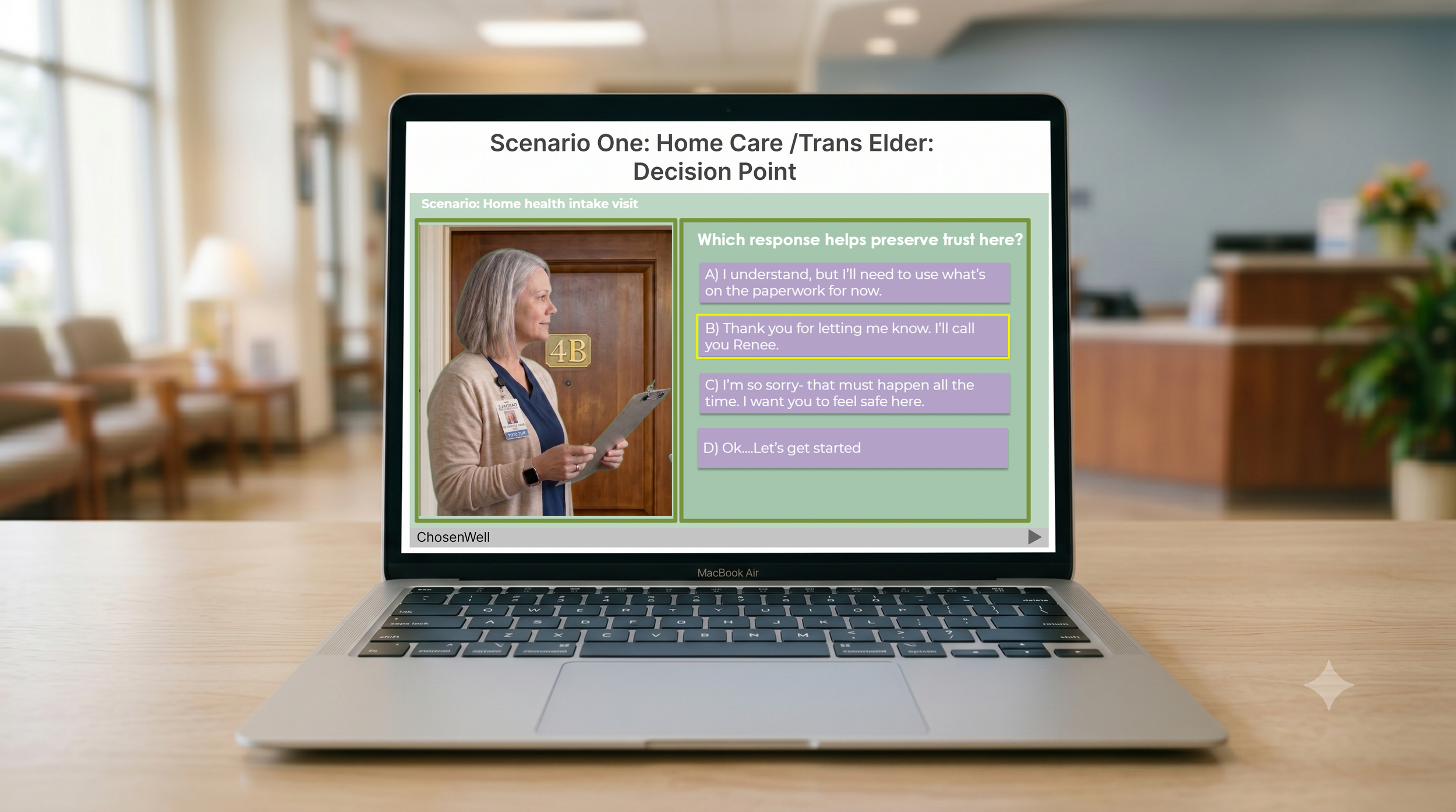
AI-Assisted Articulate Storyline Training Prototype
for Elder Healthcare
ChosenWell Prototype for Culturally Responsive ElderCare
Responsibilities: Instructional Design, Scenario Design, Storyline Development, AI-Assisted Prototyping
Target Audience: Frontline healthcare workers and care leaders
Tools Used: Articulate Storyline 360, Vyond, ChatGPT, Gemini, Hey Gen, Murf.ai
Project Status: In-progress prototype for grant proposal support
Overview
In collaboration with ChosenWell's Founder and SME, I designed an AI-assisted Articulate Storyline prototype to support a grant proposal for a hybrid healthcare training initiative. The prototype combines scenario-based learning, avatar-supported interactions, and guided reflection to help healthcare workers practice inclusive care conversations with LGBTQ+ elders and other underserved populations.
Problem
ChosenWell needed a way to help funders experience the proposed training approach rather than simply read about it. Because inclusive care is learned through practice and reflection, the organization needed a realistic demonstration of how the training could work in a hybrid learning environment.
Solution
Designed an Articulate Storyline 360 prototype that demonstrates how healthcare workers could practice inclusive care through realistic scenarios, decision-making, feedback, and guided reflection.
The prototype was created to demonstrate how a larger hybrid training program could combine:
Self-paced eLearning
Scenario-based discussion
Reflection and application
Avatar-supported storytelling
Real-world inclusive care practice
Character & Scenario Development
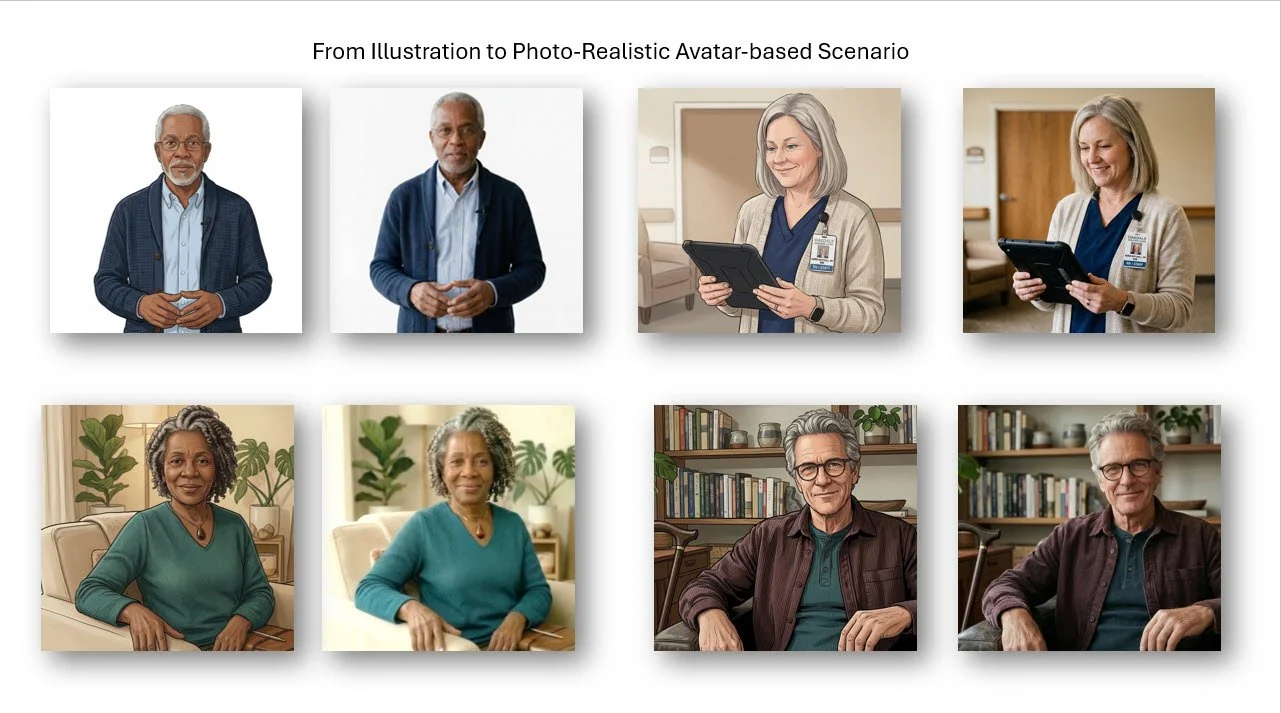
Visual concepts evolved from illustration to photo-realistic imagery and avatar-based storytelling. Multiple character directions were explored and refined using iterative text-to-image prompting in Gemini Image Creator before being developed into avatar-supported interactions.
The final prototype combines a narrator guide, avatar-based characters, and interactive Storyline scenarios.
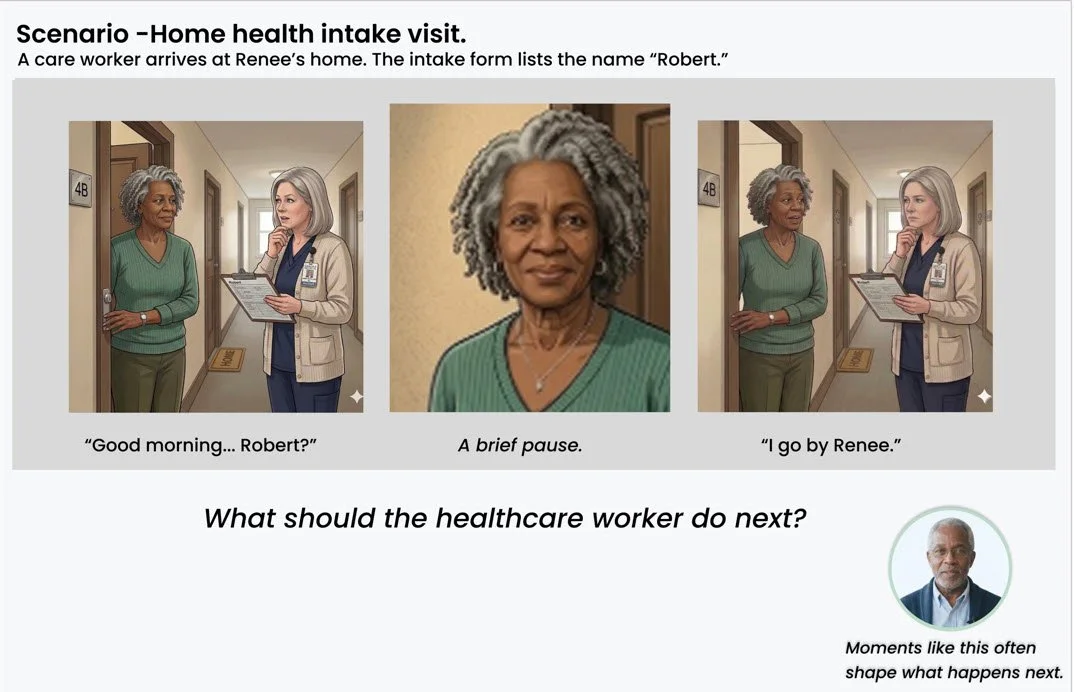
Selected Screens from the Articulate Storyline 360 Prototype
Scenario Overview:
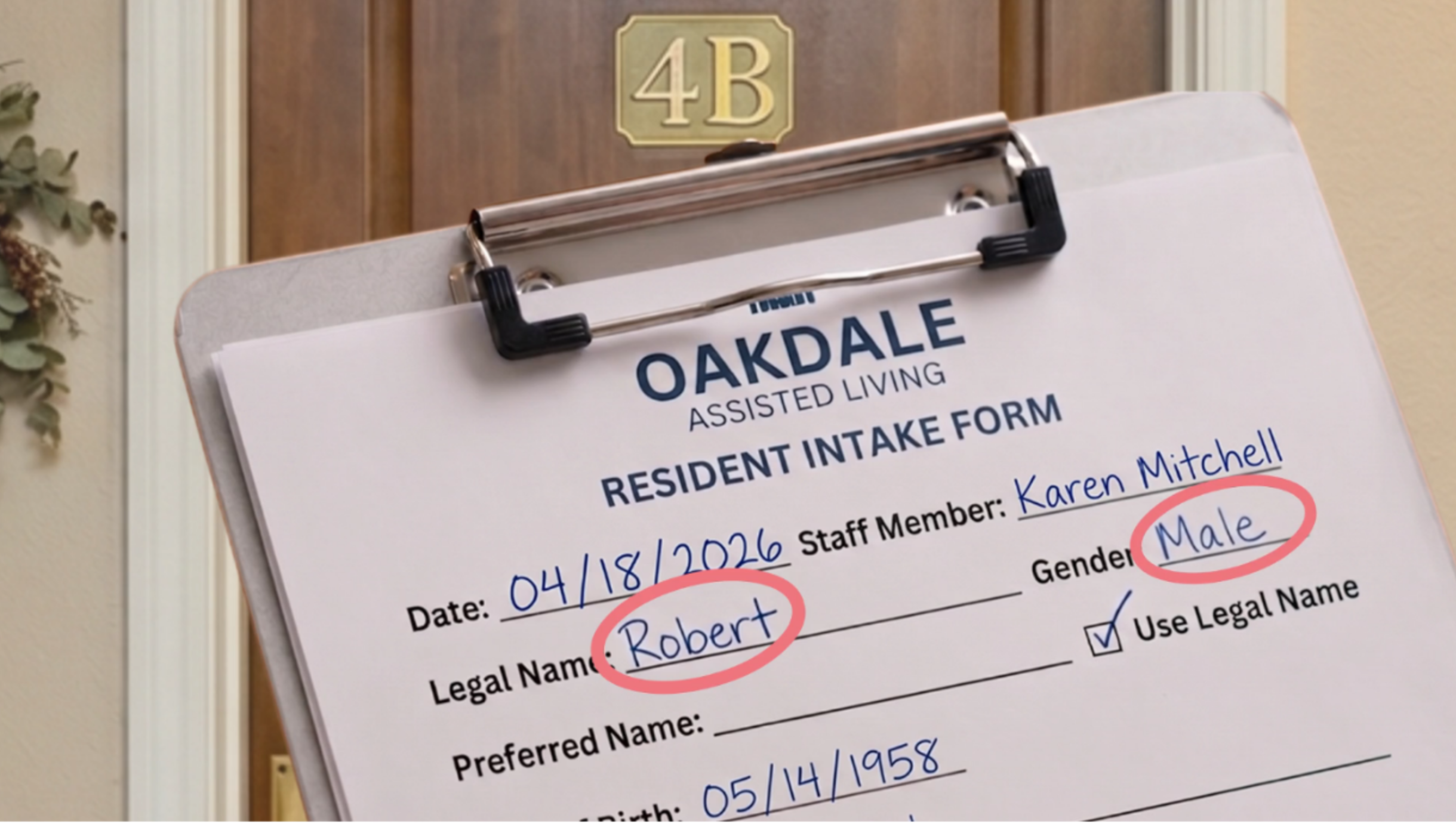
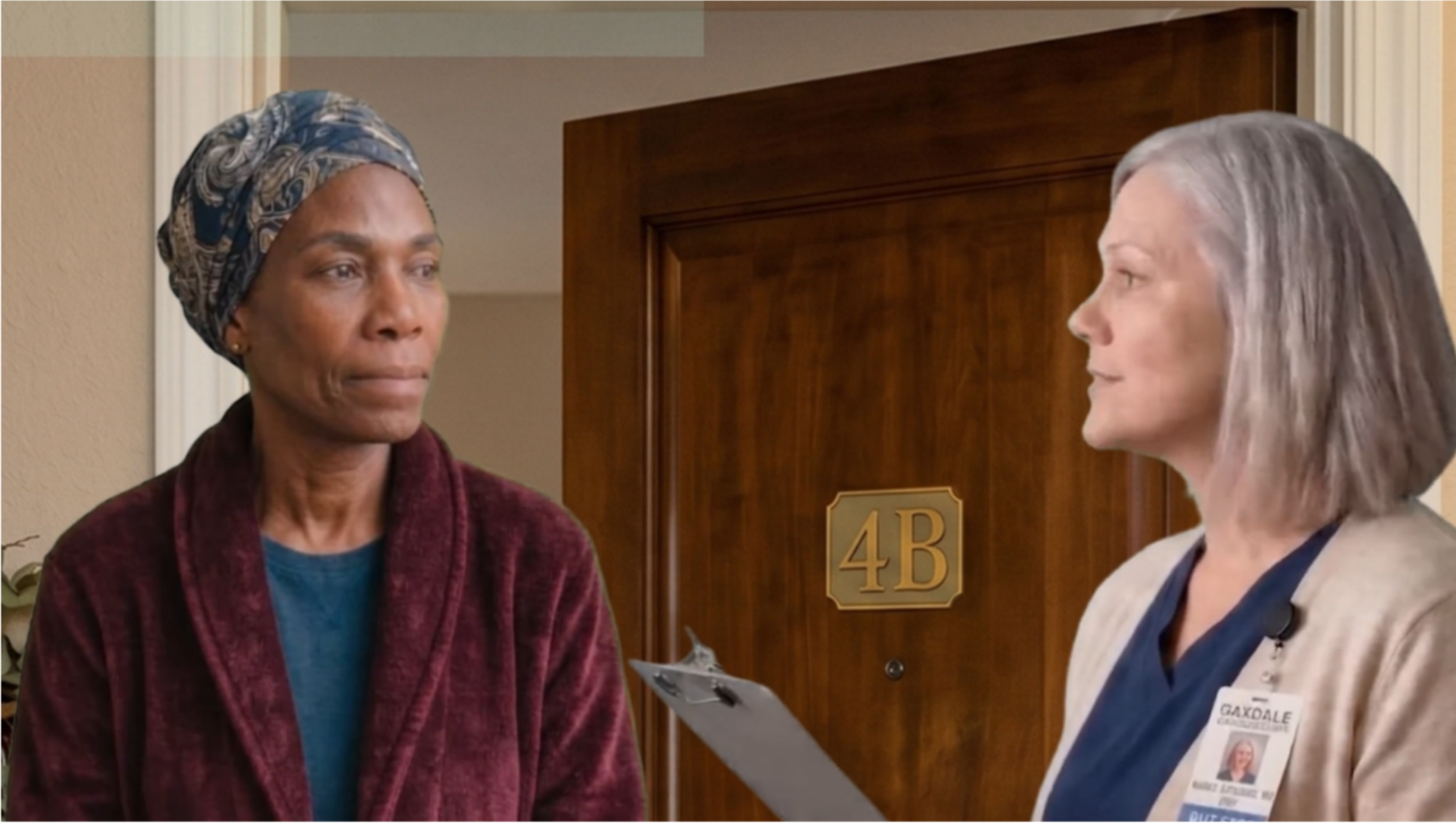
In this prototype scenario, a home healthcare worker visits Renée, an older transgender woman. During the intake process, the learner notices that Renée's legal name on the paperwork differs from the name she uses. The scenario challenges learners to recognize a potentially sensitive moment and practice communication choices that help build trust, respect, and psychological safety.
1) Recognizing the Trust Moment:
The scenario begins with a realistic intake detail: the client's legal name differs from the name she uses. Learners are asked to notice cues that may affect trust, communication, and the quality of care.
2) Entering the Care Conversation:
As the conversation unfolds, Renée explains her concern. Learners must recognize the emotional impact of the situation and prepare to respond appropriately.
3) Practicing the Response:
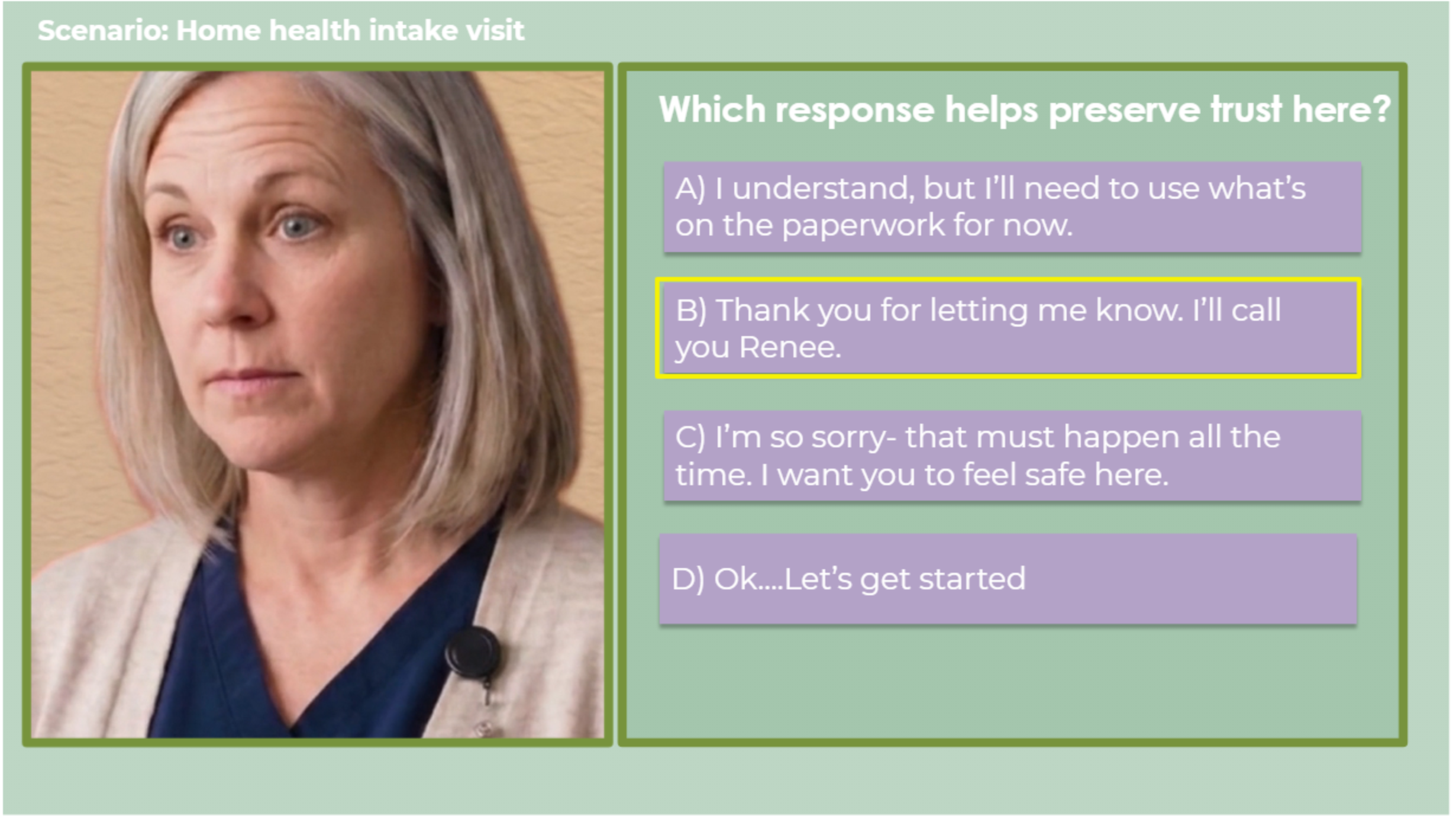
Learners choose how to respond and receive feedback on how different communication choices may support or undermine dignity, inclusion, and trust.
Design and Development Process
Developed the prototype in close collaboration with ChosenWell’s Founder and SME, using his 33-module curriculum as the foundation for the learning experience. My role is to help translate that curriculum into a focused, scenario-based prototype that can demonstrate the tone, structure, and instructional potential of the broader hybrid training model.
The development process includes:
Reviewing SME-provided curriculum content, scripts, and training goals
Identifying realistic care situations that could support scenario-based learning
Using ChatGPT to support early scenario drafting, language refinement, and interaction planning
Creating custom prompt-based images in Gemini to develop nuanced characters for LGBTQ+ elders and other underserved populations
Refining prompts and visuals to support respectful, emotionally credible representation
Converting SME-informed scripts into narrated avatar segments using HeyGen and Murf.ai
Using Vyond and Photoshop to support visual polish, scene development, and consistency
Building the interactive prototype in Articulate Storyline with decision points, feedback, and reflection moments
Throughout the process, AI is being used to accelerate development and expand creative options, while the instructional decisions remain grounded in SME expertise, learner needs, emotional tone, and respectful care practice.
Final Development / Current Status
This prototype is currently in development, with the immediate focus on creating a clear, polished sample that can support ChosenWell’s grant proposal and future training conversations.
Current development work includes refining the learner flow, integrating avatar-supported narration, building decision points in Articulate Storyline, and shaping reflection moments that connect each scenario choice to inclusive care practice. The prototype is being designed to show how the module could function both as part of a facilitated hybrid training experience and as a repurposable on-demand online course.
As the project continues, the next phase will focus on visual polish, feedback refinement, and preparing the prototype for stakeholder review.